Archive for the ‘Uncategorized’ Category

My father, today.

July 29, 2020

President Rodrigo Duterte delivered his State of the Nation (2020) address yesterday afternoon. He started with a tirade against the media giant (ABS-CBN) he had successfully shuttered then cresendoed to personal attacks on many others: the opposition, the so-called “oligrachs”, the water concessionaires and all those who have ever criticized him. He rambled. His only words for praise were for the ubuquitous senator/aide, Mr. Bong Go and Mr. Go’s “malasakit” centres (very few know what caring they give and where they are). Oh, he reassured us that we “lost” the West Philippine Sea but no worries, he talked to President Xi about having Chinese vaccine against the virus. Mr. Duterte had no words of sympathy for our beleaguered health workers, nor for the hundred of thousands stranded in Metro Manila’s cramped stadiums, nor for that matter, the millions who have lost jobs. There were no words of encouragement to the micro and small businesses struggling to survive. After more than an hour, he ended this tiresome speech by justifying his infamous drug war and renewing a call to reintstate the death penalty. The speech was a mess. The insensitivity was heartbreaking.

I am almost glad that my father isn’t around to hear this speech. Though I miss him (and actually think we could be having really great conversations in this time of my life!), I would spare him the sorrow. How terribly dissapointing this would have been for a man who passionately loved his country and was committed to its future. He, who had dreams of a prosperous country and an energized people rebuilding from the ravages of a world war and foreign rule. He, with his pursuit of excellence (“if you want to be a garbageman, be one. But be the best garbageman, ever”) and his impatience with mediocrity (“Baltik” was his nickname).

Disappointing though it might have been for him though, I doubt if he would have been disheartened. I have a sense that he would have kept faith in his people and in his country. Because that was just the way he was.

My father knew about struggle. Born poor, the youngest of five children, Bernardo came from the smallest of small Philippine barrios, where men and women raised food in small farms, caught fish in small boats and lived/died in the same house where they were born. And yet he kept going. He left his hometown for higher grade levels and bigger schools in far-away bigger towns. He became a domestic worker, in exchange for a chance at high school. He took on restaurant dishwashing, at the height of the American depression. But by kind destiny, he had a mother who nurtured his ambition and an American mentor who believed in him, his intelligence and his integrity.

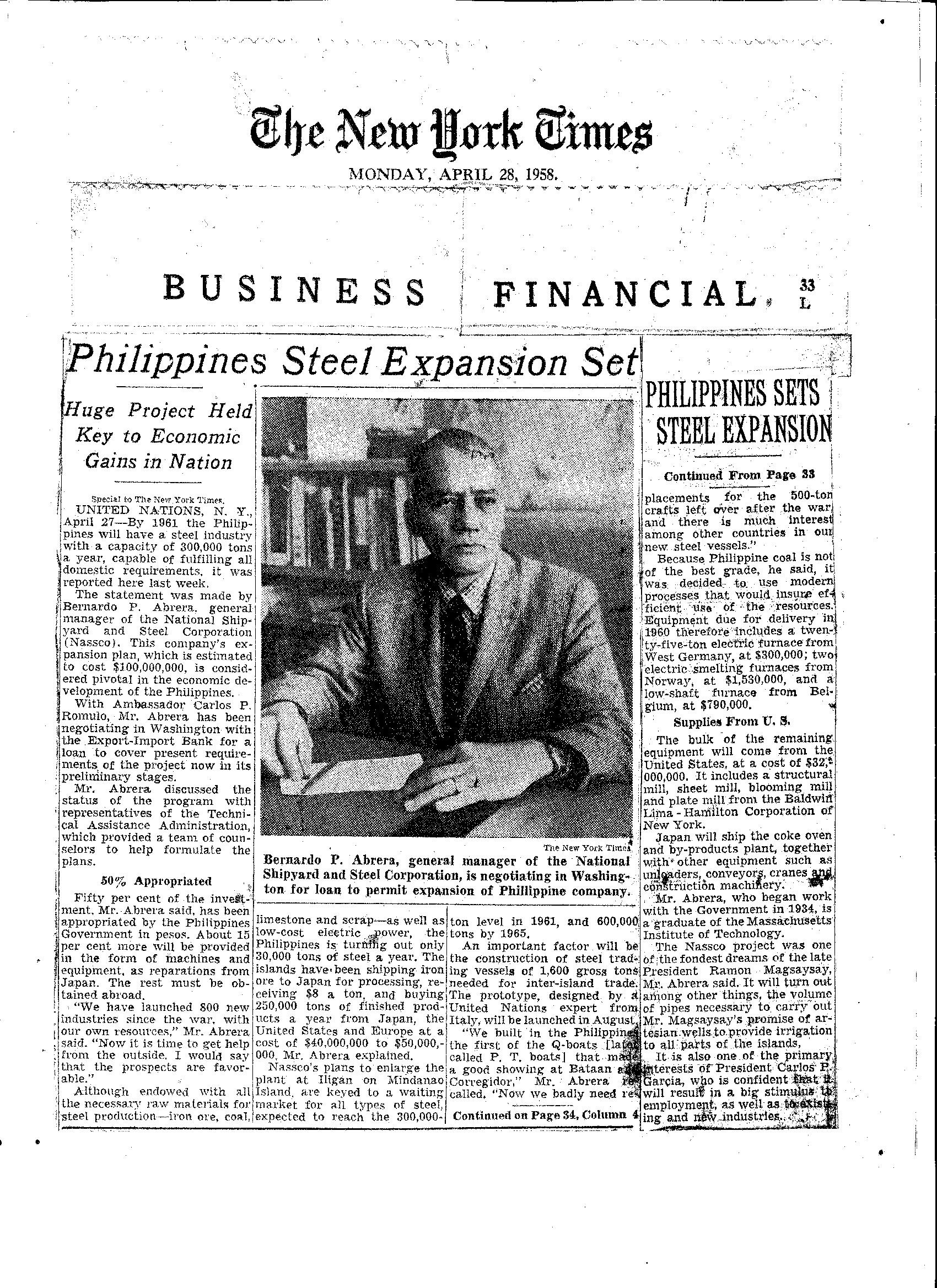
And he knew about winning against all odds, despite the ups and downs. The little Q-Boat he built just before the war survived foreign models and enemy fire; the patrol boat ferried MacArthur and Quezon to safety. Under my father’s watch, the country built its own ships. To support long-term shipbuilding, again under his watch, the Iligan Steel Mill was established. And with both, the spill-over employment and income effects built the local economies of Mariveles in Bataan and Iligan City in Mindanao.

Philippine-made ships and Philippine Steel are a testament to his vision, a nod to his persistence and to his integrity. Getting both done is a testament not only to his intelligence but also his grit. In a newly discovered file of the American Chamber of Commerce in 1947, an extended report covers the demands on my father to justify the selection of an established reputable contractor over an unsuitable late-comer endorsed by a politician. If I know my father a little, he would have been exasperated by these episodes. Yet he kept on.

Bernardo’s story goes beyond the story of ships and steel. His narrative teaches me to keep faith and keep going despite today’s darkness. His life reminds me: dreams matter; dogged perseverance matters; love of country matters. Though today, our ships and steel are mainly from China, once upon a time, we proudly built our own, equal to to the world’s best. Against all odds.

My country’s story is not yet finished. We have had our share of strugglies, victories, and falls into despair. And yet somehow, we rise up, again and again. And someday, it will all be good. Like Bernardo, we must keep the faith.
Short Memories

May 20, 2020

One early afternoon Daddy was returning from a Congressional hearing.  We were  chatting generally, including on what transpired in his morning. I can’t remember the specifics.  But I do remember him saying – “Unfortunately, people have short memories”.  A few weeks later he passed away.

Through Rory’s book project, we have had a chance to remember and also, rediscover our parents.  And as I think about them, I marvel at my parents’ influence in our lives and through us, our families.  The impact has also been on the lives of others close to both of them.

What I most remember:

My father’s strong sense of public service.  Taking a position of responsibility in government was a sacred trust. My father joined the service as the Philippines was establishing its own systems of governance after many years of struggle – 300 years under the Spaniards, 48 years under the Americans.  This was the time to prove and show Filipino capacity.  The values of  integrity and honesty were embedded in this public service ethic. While government service had its perks (the privilege of drivers, cars, the use of government housing in the regions (Baguio, Camarines, Iligan), there were strict quarantine-level limits to gifts and benefits offered by private businesses.

As government was bent on privatizing, my father did not join the private sector, notwithstanding the obvious benefits.  He instead chose to join international civil service, where his personal expertise and experience would contribute to the industrialization efforts of many other countries – India, Iran among those I remember.

Appreciation of modern values, inc. education as the path to personal progress. My parents didn’t come from backgrounds of privilege – they were not of the land-owning class, the hacenderos and politicos of old. But their families were distinguished. My paternal grandfather was a “kapitan del barrio”, he was an “escritor”, a literate man with beautiful penmanship. His wife was a “maestra”, a teacher. My maternal grandmother was a math professor whose own family members followed a military tradition.  Their families were core  to the intelligentsia – a separate, relative small group of individuals who established their worth and contribution to their own education and training.  My father’s “ascent” was especially meaningful as he rose through publicly-provided education (available only during the American period) and hard work. He also had the benefit of well-meaning mentors who shepherded him through school and opened opportunties for advancement  through education.

Compassion and generosity. Social and occupational mobility would open only for a limited few.  But for those did make it, they became the portals for others. In the provinces, basic education meant only elementary school.  Going further meant going to a nearby city center but the best schools were in Manila.  As both my parents encouraged education for all their nephews and nieces, they opened up our Manila home as the free dormitory for all.  I recall our P. Florentino home as the hub for all Abreras and Sityars, the site of many family reunions and gatherings. My cousins’ memories were shaped by our home, especially those growing in the fifties’ and the sixties.

The home was also the place for animals of various forms and shapes. My father enjoyed big and small dogs.  From high breeds to mongrels.  At different times, we had a goat, deer, pigeons, chickens and once-upon-a time, a pig.

Graciousness and Refinement.  Both my parents showed much grace and elegance.  My mother in particular knew the importance of regularly sitting down for meals, of having a well-dressed table, of the young ones  playing an instrument, of their reciting poems. They had a certain snobbery too against of those who showed their wealth ostentatiously, their nod to understatement.

Also, last but not the least, it was important to maintain a stiff upper lip especially in the face of adversity.  Our lives, as with all, were marked by highs and lows.  But my parents shielded us from many of the disruptions,  we simply never talked abut them openly.


My Economics Revisited

May 20, 2020

It must have been the last quarter of my junior year of high school. That time of year when high school seniors start thinking of a college course.  So I wrote my Dad in Bangkok about my plans. I told him I was choosing between  history or economics, my favorite subjects in high school. There was no indecision about the choice of university. It would be the University of the Philippines, where everybody in the family went, except my Mom who graduated from the University of Sto. Tomas.

In answering me,  my Dad completely disregarded the other option — i.e. history — and fully focused on the merits of an economics degree.   On hindsight, his recommendation was life defining. I graduated with honors, addressed the graduating class and immediately was hired by the Development Academy of the Philippines to elaborate on my dissertation research on the measurement of Philippine poverty.

And I find myself today, reading on Philippine economic history of the 50’s. This is really just for my Dad’s and I guess, also my family’s benefit, since in university I never took this subject seriously. Funny, how the past haunts you long after.

To recall, Frank Golay who wrote on Philippine industrialization. The post-war Philippine economy was a period of rapid expansion, a pattern that continued till the mid-sixties.  Prices were stable and national production expanded for about 56%, averaging about 7% a year.  This expansion included both the agricultural and manufacturing sectors.  Growth in manufacturing was quadrupling, largely explained by high levels of government economc activity and capital formation. There was also the tremendous infusion of foreign capital – US aid and reparations inflows.

Government was a tremendous presence in economic life.  In the early 1950’s the government was operating railroads, hotels, electric power, gas, waterworks, as well as producing coal. cement, fertiliser, steel, textiles, yarns.  It had investments in manufacturing incandescent bulbs, pulp and paper.  There was a national bank (PNB) and a national airline (PAL). Among the manufacturing enterprises government established were the prestige investments – the shipyard and the steel mill.

These government investments were important measures to build the people’s hope for the future.  Consider a young republic seeking to rebuild the economy post war and eager to demonstrate its independent capacity and abilities. With a band of U.S. trained technocrats, the government was seeking to spread its wings and jumpstart national ownership and entrepreneurship.

All these efforts posed a threat to the long-standing dominance of established elites. Almost as soon as post-war rehabilitation began, complaints against government enterprises started  with venomous charges of corruption,  nepotism and inefficient management. Seeking to dampen the criticism,  the government launched several initiatives to encourage “new and necessary” enterprises that would help restore pre-war industries. It included tax incentives,  these new industries were exempt from paying taxes for four years and more,  then controlled foreign exchange allocations were allocated to subsidize industrial development.  These incentives backfired.  Filipino entrepreneurs sought economic advantage through political institutions and processes.  Many of the apparently well-developed political, legal, and bureaucratic institutions had shallow roots and could be easily manipulated by powerful political-business oligarchs. Soon, there were unrecedented levels of imports, financed by high levels of the United States disbursements under War Damage Payments and other programs. The private sector enjoyed windfall profits and this path to undustrialiation proved unsustainable.

Interviews forthcoming

BPA New York Times to Chris


Volunteer Mom

May 16, 2020

I do not know when Mommy’s buying/selling enterprises ended and private volunteering became full time.  But in my intermediate and high school years, I got caught up in her volunteering activities.

Very early, there was the Philippine Band of Mercy, a private organization providing free surgical and recovery services to children born with harelips.  Mommy and sister Rory organized all kinds of fund-raisers. My contribution?  Every so often 2nd sister Bernie and I had to prepare a presentation for  donors (doing some kind of flamenco for the Spanish Ambassador was especially embarrassing). When Mommy got involved with the Inner Wheel Club of Manila, the volunteer activities became more varied and at times, intense.  Mrs. Pilar Joaquin (who also became Inner Wheel President)  and my Mom set up a women’s center hat not only trained women to sew but also provided regular income to the sewers.  There were feeding programs for the elderly at Golden Acres.  Most of the cooking was done at our home with huge calderos (cauldrons, really) of arroz caldo, a Filipino hot rice/chicken soup. At Golden Acres, my job was to hand out the soup bowls to the “Lolas” (the grandmothers) and listen to stories about their youth, their children and grandchildren.  I just remember a lot of sadness in that old folks’ home. And then, there was the packing of relief goods after bad typhoons hit Manila.  Mrs. Joaquin, Mom’s good friend, thought I was a great packer, and that was enough of a reward for me!

My Mom treated these activities as being normal and nothing out of the ordinary. I never thought that we were doing anything grand, noble or special.  Years later, when my own work took me to very poor communities in many different parts of the world, nothing much would ever faze me. My mother prepared me well.


Entrepreneur Sally

May 12, 2020

In time, my Mom became better known as Sally.  And Sally was quite an entrepreneur.

My first memories of my Mom as a business woman start with her export of exporting  wooden carvings, salad bowls and plates to the United States in paertnership with good friend Mrs. Tamesis.  AbTam (Abrera Tamesis Enterprises), a home-based workshopflourished for some time until the two partners couldnt meet the expanding demand for wooden sculptures and other products.  Then my mother met Mrs. Clarafina Ventura, a master cutter with American experience and together they set up Rosafina Dresses, a shop on Espana Extension in Quezon City with a target clientile of American ladies of  JUSMAG.  As a child, I enjoyed looking at beautiful dresses at L’Officiel magazine, chatting away with dressmakers and seamstresses (the shop must have done good business, Rosafina had a crew of at least 6 dressmakers!).  When my parents moved to Bangkok, Rosafina closed but a little boutique store at the Sta. Mesa Market stayed on.  In Sta. Mesa Market, my Mom stocked up on Thai Bangkok goods, usually bolts of dfferent colored silk, silver and copper bracelets and bronzeware that Bangkok was so well known for.

During that period, I traveled with her to source her products, either to the Laguna province (for wooden products of Paete), a Manila central market (for baby dresses that she would restyle) or to a Bangkok side street for her bronze products. My mother’s small business enterprises provided her opportunities to stretch her abilities in finance, negotiating and marketing; her earnings  brought a higher quality of life and contentment at home.  She liked to call herself as a “housewife” but looking back, I am convinced she created and conserved the economic resources/assets of our family.


The Joys of the Quiapo Market

May 12, 2020

During my early years, my mother brought me everywhere.  Some of my earliest happy memories involve food shopping at the Quinta Market in Quiapo.

Those weekly trips were joyful adventures.  Going to Quiapo,  we would take a short walk from home to Quezon Boulevard then take a jeepney to Quiapo.  My father always offered the family car but my Mom insisted on the straight non-stop jeepney ride. Though often, we would take a taxi for home.

The Quinta Market of the 19th century was the central market of the City of Manila, originally catering to the wealthy families that lived in Quiapo. Through time,  it had become one of the city’s most important markets, generating significant revenues while also catering to residents of all social classes.

In the 60’s, Quiapo was a bustling dynamic hub of economic activity. Venturing into the Quiapo Market meant meeting up with my Mom’s many “suki” (favourite sellers) in separate sections – the meats for pork and beef, the seafood for  fish and shrimps and of course my favourite the airy  vegetable section which opened up to  the pasig river. At the meat section, a large fair-skinned unforgettable woman called “Mestiza” chopped pork and beef with a flourish, flashing her 2 carat brilliant diamond rings.  At the fish and shrimps section, my mother personally investigated the fresh fish  (look for bright shiny eyes and open the gills for a color-check). At the vegetable section my mom would give this thin wiry woman her list — a few leaves  here and there (pepper, chili, moringa, spring onions etc) along with  many many kilos of garlic, onions and tomatoes, the main ingredients for the Filipino saute.  All our purchases went into palm leaf bags called bayongs.  Looking deceptively light, these bayongs can carry loads of produce and purchase.

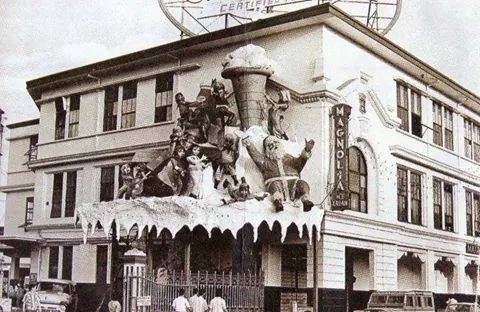
Once in a while, at the end of a shopping trip, Mommy would bring me to the Magnolia ice cream soda fountain.  These were extra special occasions where we would mark a pre-birthday, a great school grade or maybe a non-event like a really hot day.ice cream station

Many years later when I took a shine on traveling within and outside of the country, one  favourite stop  would be the public market.  In many cities and towns, big or small, the public markets offer a glimpse of  the real life of people — their food preferences, their choice of cooking and more important, their equal treatment of people.  In Batangas, go for the meat delights.  In Pangasinan, the anchovy appetisers are a must. In Baguio, the vegetables are super. The Grand Souk of Istanbul,  Chatuchak/Ottocko in Thailand, Meze in Southern France have all offered indelible memories. But still for this still young girl, nothing can quite beat the emotional kick of the Quiapo market.


Nenita, Sally

May 10, 2020

My mother, Rosalia, was wonderful.  She had a lovely singing voice, an unforgettably  boisterous laugh and was known all her life as a generous do-gooder.

Rosalia, also known as Nenita in her family, met my Dad while working as a ticket seller at the Tutuban Train Station.  He was senior to her, with an age difference of 12 years.  She had a boyfriend at that time it seems, a Spanish mestizo who worked at the electric power plant and played football.

Why she gravitated to my father, I don’t know.  Dad must have presented an impressive picture. Back from the U.S. as a pensionado, he was already heading his own unit at the Engineering Island.  Some of her friends found him proud and arrogant.  Once, while my Dad was visiting my Mom at the train station, his car tires were punctured by the envious ones. (Whoa, he had a car?).  They had planned to be married in HK but the war broke out. So they were married the San Miguel Pro-Cathedral in Manila (December 10, 1941).

My Mom had pedigree.  Her father, Guillermo Sityar, was a Math professor at the University of Sto. Tomas with a family tradition in the military.  Her mother, Teodorica Baltazar of Pasig,  was related to the Poet Laureate Francisco Baltazar (Francisco Balagtas), author of the Filipino epic Florante at Laura.  Guillermo and Teodorica had nine children, my mother was their 8th child.  Only five of the eight survived their childhoods:  Primitiva, Lucilo, Nicanor, Rosalia and the youngest, Miguel.  The Sityars lived at the heart of Intramuros, 24 Real Street,  nearby San Agustin Church and a stone’s throw away from the Spanish City Hall (the Ayuntamiento).  Many years later, while working at the Department of Labor extension office at Real Street I often wondered where my mother grew up.

Guillermo died young of  a heart attack at a young age and the family’s well-to-do status declined. Primitiva married early and moved to Cebu. My mother and her younger brother Miguel moved with her. It was a tough life, my mother recalled. Studying at La Imaculada Concepcion, my mother knew discrimination and abuse (many stories of wealthy classmates laughing at her darned socks or being kept away from theatrical roles). But she strove and did well at school, her many achievement medals are proof. She returned to Manila for her senior year in high school, graduating from the Sta. Rosa Convent (?) in Intramuros, Manila.

Her youthful experiences left their mark.  My mother always warned me about the volatility of status and wealth and the importance of kindness (Remember that the people you step on your way up will greet you on your way down).  She also firmly believed in the value of education (“Nobody can take that away from you”).

I first met my Mom as a college student, as she decided at age 37 to pursue a college degree  (A.B. Philosophy) at the University Sto. Tomas.  I always tell my siblings that my Mom was college educated, theirs wasn’t!


Getting to know my Dad

May 9, 2020

Being the youngest in our family, I didn’t really know my Dad. And as I myself age, my memories are getting fuzzier. With the 50th anniversary of his passing (2022) approaches, getting to know him much better is my personal goal.

A Different Type of Dad

Growing up, I kinda knew my Dad was different. Well, he was older than my classmates’ Dads. And he had this presence, this gravitas. My mother used to say his charisma was all about how people responded when he entered a room (well, she used to say that about Douglas McArthur, so that is saying something). And the way my cousins always looked up to him and how “his people” spoke fondly and affectionately of his management. And everyone — family, friends, staff —  uniformly said that he was brilliant.

It was easy to come to that conclusion. Each time I go back to Concepcion, his birthplace, I often think about how my father managed to rise above the genteel though grueling community poverty to push himself forward. And that drive helped make him the man that he is. And also help shape his children.

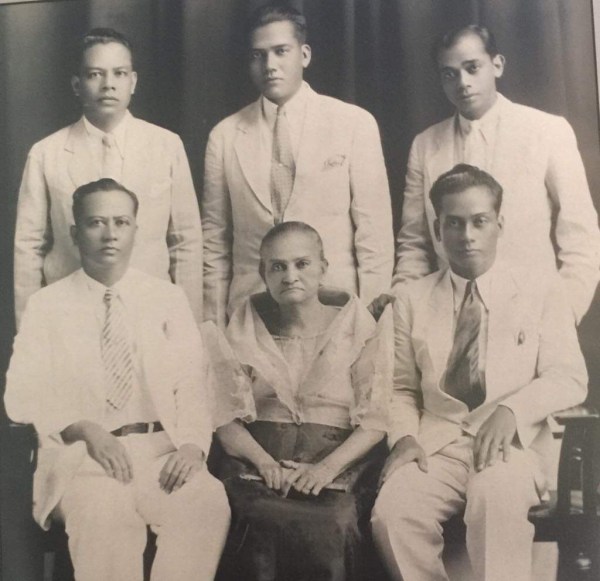
The Basilio Abrera Family

IMG_8586

with mother Josefa and his brothers

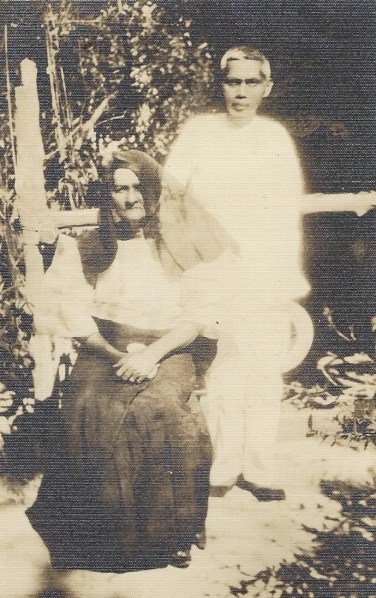
There are different legends about Basilio and Josefa (Paez) Abrera. From pictures, Basilio looks like a true Abrera — dark, swarthy, big-eyed. He was not terribly tall it seems to me, more like many of the men born in the Philippine 19th century. There is some agreement that Basilio was born in Northern Palawan, possibly in Culion?. What we do know is that Basilio and Josefa moved from Culion to Coron, likely around 1902-1903.

Josefa was the iconic matriarch. Coming from Iloilo (a Paez), she was, according to one family legend, a fair-skinned “interna”,  brought by Catholic nuns to Palawan. Did she come with the the St. Paul nuns of Culion?  Somehow though, I don’t see her as a nun. Another chismis is that  Josefa was previously been married to a French man who then returned to France. More, she  had a daughter who eventually joined her father. A third story is that Basilio and Josefa met in Manila. While trading goods in Manila, Basilio stayed at the Paulinian dorms where Josefa served. 


With all this speculation, I wonder whether anyone has ever tried checking for the birth certificates of either Basilio and Josefa, or even check out the Culion church records to trace the journey of the couple.  

One thing we know for sure, Josefa was called “the Maestra” , a strict disciplinarian, who did not hesitate using the cane on her sons.

Basilio and Josefa had six children, starting with Vicenta, followed by Melquiades, Victorino, Carlos, Jose, and Bernardo. A oft-repeated story is that Vicenta eloped at a young age, marrying Captain Jose Barrientos. Basilio and Josefa were upset, her elopement caused a family rift that was not easily healed. That is perhaps the reason why we have such few pictures of the unica hija of the family.

IMG_5727

When was my father born?

My Tio Carlos stirred a hornet’s nest when he declared, at the time of my father’s funeral, that he could not have been born in 1904, as his Philippine and UN passport showed. My mother was not in any state to argue, so his cemetery marker reflected Tio Carlos’ suggested date: March 12, 1900.

Was this perhaps a mistake? Should we have just relied on his passport information? (Philippine birthdates are notoriously reliable pre-war, as records were hardly kept and the few that were there, were burned during the war).

My father placed his birthplace as Concepcion, Coron in his campaign flyer during his short unsuccessful attempt to be a delegate to the 1971 Constitutional Convention. If so, he must have been born in 1904, since the Culion relocation to Coron started only in 1902 and the barrio of Concepcion itself founded in 1904.


Jack, larger than life (a repost)

May 9, 2020

Posted on April 16, 2013 

This is my nth try in starting my journal about Jack and Sally, my parents. Somehow, though I have finished almost final drafts of the first ever blog, these disappear into cyber- heaven. Meanwhile, a second blog written painfully about my father’s death makes it to print without a hitch. 

My father’s name was Bernardo and in his Coron family, he was always known as “Dading”. My mother called him “Ding”. I always thought it was a shortened “Darling” but, of course, it’s a shortened Dading. I knew my father mainly as Jack, a name that he took on as a student at MIT in Boston when he was a government scholar in the 30’s. It is the name that he used in his professional career. 

At anytime, even today, my father’s journey can only be considered remarkable. Born of humble means in remote Busuanga in Palawan, his parents were dignified, educated, of some status in their small town. Basilio, a fisherman, founded the town of Concepcion, after he and his community left Culion as it became the country’s leper colony. He eventually became the “inscritor” of the parish priest, taking copious notes of the goings on of the community. Josefa, his mother, was known as “maestra”, a 4th grade graduate but, at that time, educated enough to teach others to read and write. Josefa was driven about schooling. She moved her family to Cuyo to stay with her relatives to make sure they had better education. As family funds could only support the elder kids, Basilio and Josefa agreed for her youngest 2 sons to move to Iloilo with the Thomasite teachers. Her 5 sons all graduated from college in Manila and pursued professional careers. 

Bernardo was always special. He graduated valedictorian of his grade school and high school classes, went to Silliman University for an Associate Degree, moved to U.P. where he completed his college degree in engineering. He pursued marine engineering and naval architecture at MIT in Boston, graduating with enough distinction that MIT would often request him to represent the university in several academic events in Manila. Years later, he got Outstanding Alumnus Awards from both Silliman and UP. 

I did not know much of my father’s government career, I was born at its peak, but have enjoyed my mother’s studious clippings of that time. I have snippets of memory – of the motortug trips to Mariveles, Bataan, summer vacations in cooler Baguio, and travels with family to Camarines Norte, Iligan and even Tawi-Tawi. 

Early Education in Coron and Cuyo

May 9, 2020

Daddy went to Concepcion Elementary School in Coron. These days, the school sprawls very near our family home in Concepcion and right in the centre, there is a marker showing the founders of the town, including Basilio Abrera, who served as capitan del barrio. Right across the square is the site of the old Church.

When Bernie and I visited this church in the 70’s, the church had a very rustic feel. It had massive pillars of thick narra. Inscibed on these narra trees were initials of the town founders. Basilio’s BA, were clearly visible to all. This church has since been rebuilt in concrete, glass and steel, and unfortunately the pillars with the founders’ initials have disappeared. Fortunately, the church bells of Culion are still in Concepcion in a tower beside the church.

Why did my father go to Cuyo for his intermediate years? It is likely that as a barrio, Coron had only a 4 year elementary school. Reports of those years show that that 82% of students then stopped at grade 4. Still for others, the  American educational system provided higher tiers – after primary school of four years, a student could follow with  a three year intermediate elementary and complete  high school for four years.  

Josefa clearly wanted her children to do better than her and achieve high school and college. (More research needed on this. )